Two candidates walk into the same interview with identical resumes. Same experience, same qualifications, same answers prepared. One gets the offer. The other doesn’t.
Sometimes the difference comes down to something as simple as how each person showed up dressed. Unfair? Maybe. Real? Absolutely.
Dressing well in professional life isn’t about vanity or chasing designer labels. It’s a practical skill that affects hiring decisions, promotions, client trust, and daily workplace dynamics. And building that kind of wardrobe is more accessible than people think, especially once you start watching for a genuine yard of deal on the right pieces.
Let’s look at why dressing well carries so much weight professionally, and how to actually do it without overspending.
Why Professional Appearance Still Matters
Despite years of casual dress codes spreading across industries, appearance still plays a measurable role in professional outcomes. Hiring managers, clients, and colleagues form impressions quickly, often before someone has said a single relevant word.
This doesn’t mean substance doesn’t matter. It means presentation often determines whether people get the chance to demonstrate that substance in the first place.
The Gap Between Casual Workplaces and Casual Standards
Many modern workplaces have relaxed formal dress codes, but this doesn’t mean appearance stopped mattering. It simply shifted what “dressing well” looks like. Polished casual wear has replaced strict formal wear in many industries, but sloppiness still creates the same negative impression it always did.
Understanding this distinction matters more than simply assuming casual workplaces mean appearance is irrelevant.
Hiring and Interviews
The interview stage is where dressing well often carries the most immediate, measurable weight.
First Impressions Happen Before You Speak
Interviewers, like anyone else, form quick impressions based on appearance. Well-fitted, clean, appropriately formal clothing signals preparation and respect for the process before a single question gets answered.
This doesn’t require an expensive suit. A well-fitted, simple outfit, even one assembled through a smart yard of deal, often outperforms an expensive but poorly fitted alternative.
Matching the Company Culture
Dressing well for an interview also means dressing appropriately for the specific company and industry. A finance firm and a creative startup have very different expectations, and matching that expectation signals research and genuine interest in the role.
Showing up slightly more polished than the company’s everyday dress code is usually a safer choice than showing up too casual.
Workplace Perception and Daily Credibility
Once hired, dressing well continues affecting how colleagues and supervisors perceive competence and reliability.
Competence Bias
Multiple workplace studies have found that well-dressed employees are often rated as more competent, even when actual performance metrics are identical to less formally dressed colleagues. This bias isn’t necessarily fair, but it’s consistently documented.
This means dressing well isn’t just about looking the part. It can directly influence how your actual work gets perceived and evaluated.
Authority and Leadership Perception
People in leadership roles are often expected to dress slightly more polished than their teams, reinforcing a sense of authority and reliability. This expectation exists across many industries, even relatively casual ones.
Employees aiming for leadership positions often benefit from gradually adjusting their professional wardrobe to reflect the level they’re aiming for, not just their current role.
Client and Customer-Facing Roles
For roles involving direct client interaction, dressing well takes on additional significance tied directly to trust and business outcomes.
Building Immediate Trust
Clients often judge competence and reliability based on appearance during initial meetings, particularly in industries like finance, law, real estate, and consulting. A polished appearance signals attention to detail, which clients often associate with overall professionalism.
Representing the Company Brand
Customer-facing employees essentially represent their company’s image through personal appearance. This is part of why many companies maintain dress codes for client-facing roles, even when internal teams enjoy more relaxed standards.
Networking and Professional Events
Professional dressing extends beyond daily office life into networking events, conferences, and industry gatherings, where first impressions often determine future opportunities.
Standing Out for the Right Reasons
At crowded networking events, a polished appearance helps create a memorable, positive impression among numerous interactions happening simultaneously. This doesn’t mean standing out through flashy clothing, but through clean, well-fitted, appropriately professional choices.
Signaling Seriousness About Career Growth
Dressing well at industry events signals genuine investment in professional growth, which often influences how seriously potential mentors, collaborators, or employers take the interaction.
How to Dress Well Without Overspending
Understanding the importance of professional appearance doesn’t mean breaking the budget to achieve it. Smart strategies exist for building a polished wardrobe affordably.
Focus on Versatile Basics
A few well-fitted basics, neutral trousers, quality button-down shirts, a solid blazer, can be mixed and matched to create numerous professional outfits without requiring an extensive wardrobe.
Prioritize Fit Over Brand Name
A well-fitted, moderately priced outfit consistently outperforms an expensive but poorly fitted alternative in professional settings. Tailoring inexpensive pieces is often more cost-effective than buying premium clothing that doesn’t fit properly.
Take Advantage of Smart Sales
Watching for a legitimate yard of deal on quality professional basics allows for building a polished wardrobe gradually, without significant financial strain. End-of-season sales, in particular, often offer substantial discounts on timeless professional pieces.
Invest Strategically in Key Pieces
Rather than spreading budget thin across many mediocre items, focus spending on a few key pieces that get worn frequently, like a well-tailored blazer or quality dress shoes, while saving on items used less often.
Industries Where Dress Standards Still Matter Most
While dress code flexibility has spread broadly, certain industries continue maintaining stricter expectations around professional appearance.
- Finance and banking, where formal, polished attire remains the standard expectation.
- Law, where conservative, professional dressing continues signaling credibility and seriousness.
- Consulting, where client-facing polish remains essential to maintaining professional trust.
- Real estate, where appearance often directly influences client confidence during high-value transactions.
- Executive leadership roles, across nearly every industry, where polished appearance reinforces authority.
Industries With More Flexibility
Creative fields, technology startups, and certain remote-first companies often allow significantly more flexibility, though “polished casual” still tends to outperform sloppy or careless dressing even in these more relaxed environments.
Conclusion
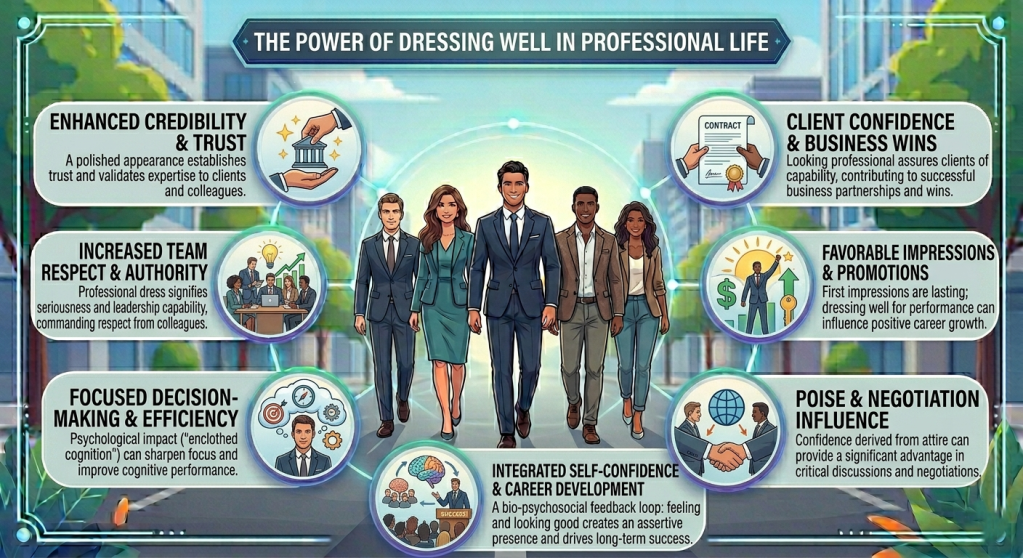
Dressing well in professional life carries real, measurable influence over hiring decisions, workplace perception, client trust, and networking opportunities. This isn’t superficial. It’s a practical skill that affects tangible career outcomes.
Building a polished professional wardrobe doesn’t require significant financial investment. Prioritizing fit, choosing versatile basics, and occasionally catching a smart yard of deal on quality pieces allows nearly anyone to dress the part without straining their budget.
In a professional world where first impressions form within seconds, taking dressing well seriously isn’t vanity. It’s strategy.
FAQs
1. Does dressing well really affect hiring decisions? Yes, to a measurable degree. Interviewers often form quick impressions based on appearance, and well-fitted, appropriate clothing can positively influence those early judgments.
2. Is it necessary to dress formally in casual workplaces? Not necessarily formally, but polished casual dressing still outperforms sloppy or careless appearance, even in companies with relaxed dress codes.
3. How can I dress professionally on a tight budget? Focus on versatile basics, prioritize fit over brand name, and watch for a genuine yard of deal on quality professional pieces, especially during seasonal sales.
4. Does professional appearance matter more in certain industries? Yes. Industries like finance, law, and consulting tend to maintain stricter expectations around professional dressing compared to creative or tech-focused fields.
5. Can dressing well actually influence workplace credibility? Multiple studies suggest yes. Well-dressed employees are often perceived as more competent, even when actual performance is identical to less formally dressed colleagues.


